
language
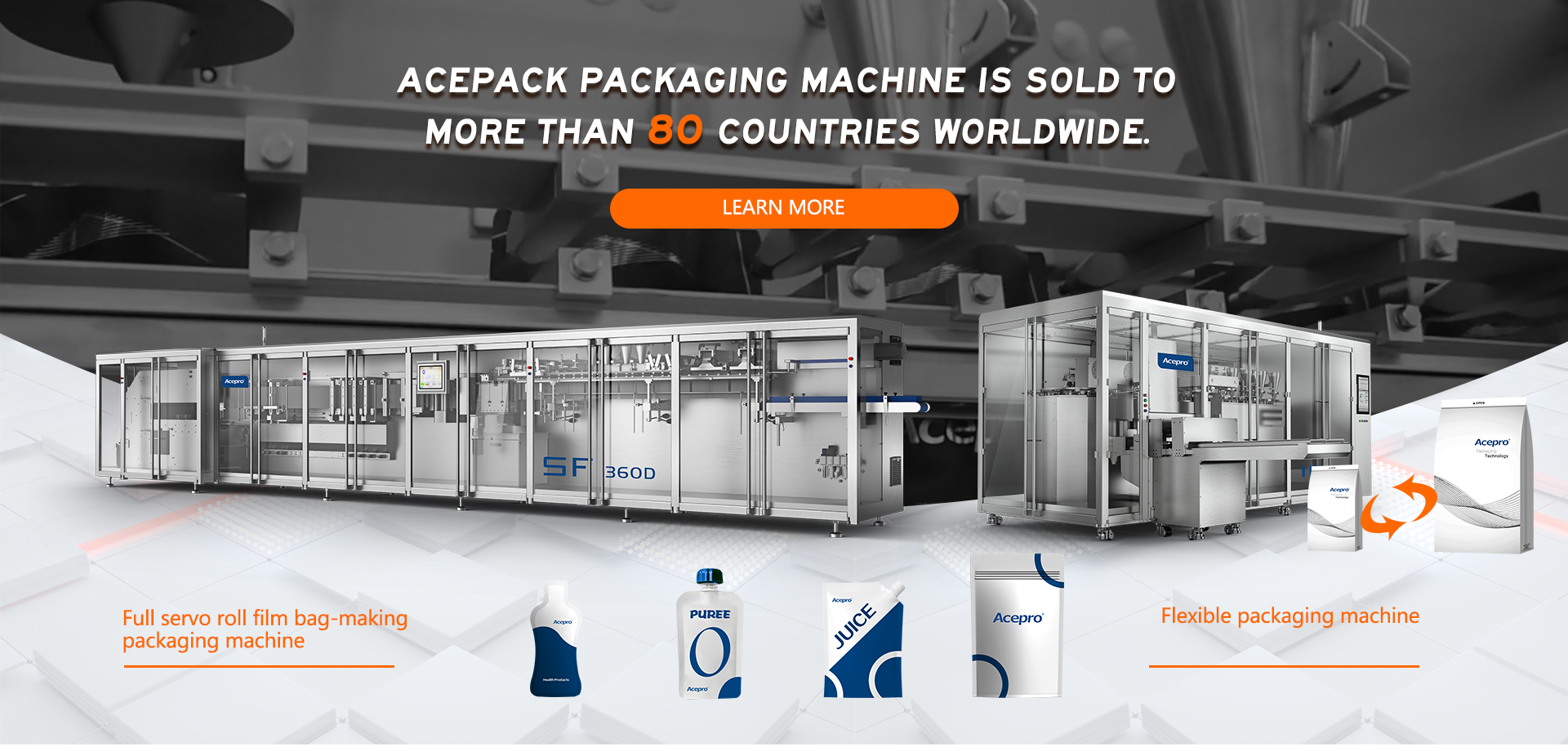

WELCOME TO ACEPACK
Company profile
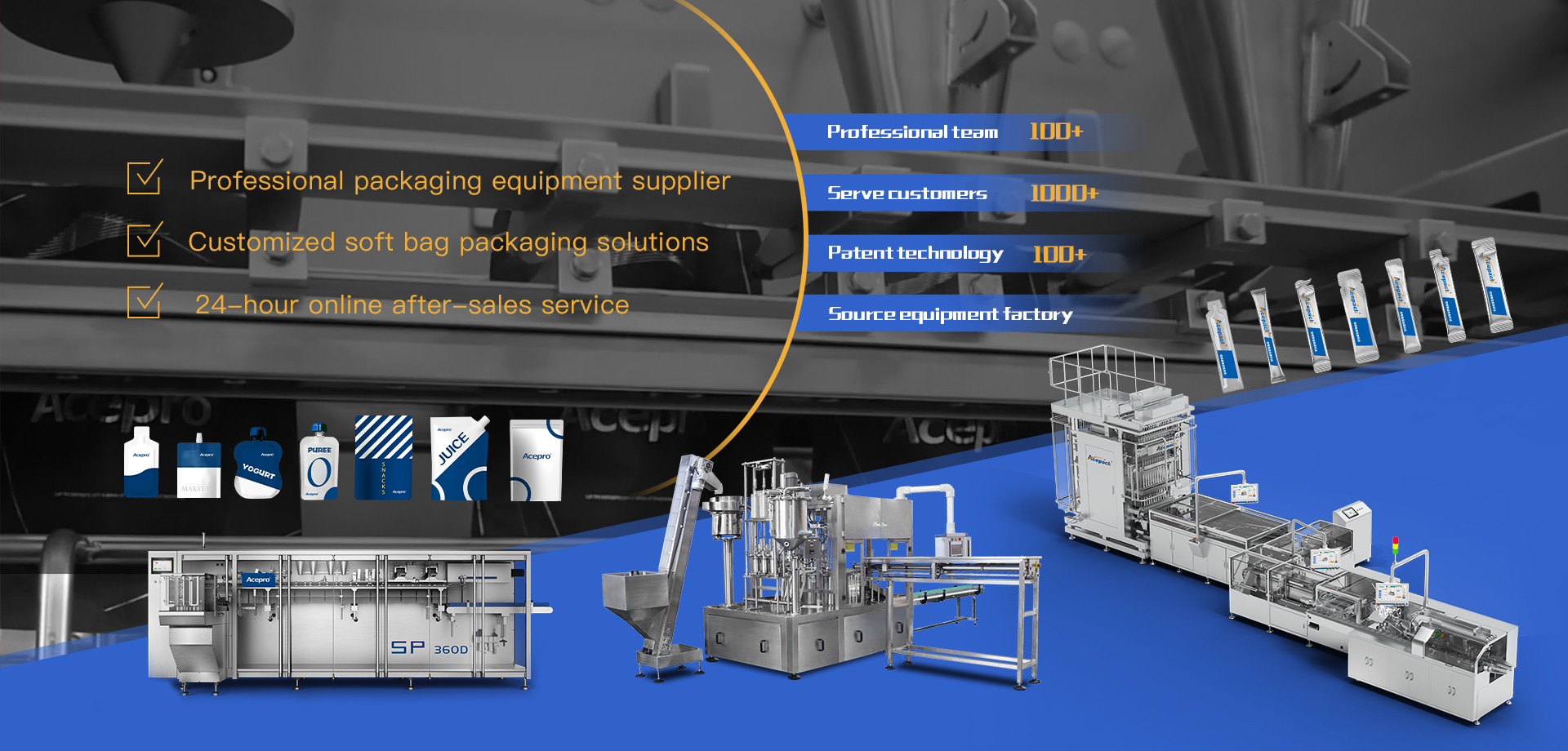
Shanghai Acepack Intelligent Technology Co., LTD. was established in 2005 with registered capital of 20 million. Acepack is a high-tech enterprise committing on development, manufacturing, sales and service of intelligent packaging system and fully automatic packaging equipment. Since the establishment, Acepack has been dedicating to offer complete turn-key packaging solutions to our customers.
Adhering to the concept of Creation, Study, Integrity, Unity and Win-win, Acepack has offered customized pouch packaging solutions to customers located in more than 50 countries and regions of the world, and gained its reputation by good quality and service.
SINCE 2005
Hot Products


Comprehensive Solutions
Acepack provides complete packaging solutions for efficient and effective packaging.
Innovative
Technology
Acepack utilizes cutting-edge technology for intelligent packaging systems.
Customer-Focused Approach
Acepack works closely with customers to customize solutions to their unique needs.
Global
Reach
Acepack has a reputation for quality and service, with customers in over 70 countries.
“Acepack - Your One-Stop Solution for Intelligent Packaging Systems”
“Innovative, Reliable, and Customer-Focused - Trust Acepack for Your Packaging Needs”
LATEST NEWS


08-21-2026
Tips for Coffee Sachet Packing Machine Maintenance
Coffee Sachet Packing Machine Maintenance Tips: Keep Your Production Line Running Smoothly Why Regular Maintenance Matters for Your Coffee Sachet Packing Machine If you run a coffee production line, your coffee sachet packing machine is the heartbeat of your operation. It fills, seals, and packages thousands of sachets daily. When it breaks down, every minute of downtime means lost revenue, wasted materials, and delayed orders. But most costly breakdowns are entirely preventable with a consistent maintenance routine. In this guide, we'll walk through practical, actionable coffee sachet packing machine maintenance tips that will extend equipment life, reduce unplanned stops, and keep your product quality consistent. Daily Maintenance Checks (Start Each Shift Right) These 5-minute checks can catch small issues before they become expensive repairs. 1. Clean the Sealing Jaws Every Single Shift Coffee residues and oil can build up on the sealing jaws, causing weak seals or burnt packaging film. Action: Wipe the sealing jaws with a clean, dry cloth after each production run. For stubborn residue, use a food-grade cleaning solvent recommended by your machine manufacturer. Why it matters: Clean jaws = consistent seal strength = no leakers in your finished sachets. 2. Inspect the Film Guide Rollers Misaligned film paths cause wrinkles, uneven cutting, and jams. Action: Visually check that the packaging film runs straight through all guide rollers. Remove any dust or debris with compressed air. Why it matters: Smooth film travel reduces waste and ensures accurate sachet sizing. 3. Check Nitrogen Flushing Pressure (If Equipped) Many coffee sachet machines use nitrogen to displace oxygen and preserve freshness. Action: Verify the nitrogen pressure gauge reads within the recommended range (typically 0.2–0.4 MPa). Listen for any hissing leaks along the gas lines. Why it matters: Incorrect pressure compromises coffee freshness and can lead to bloated or collapsed sachets. Weekly Maintenance Tasks (Preventative Care)Set aside 30–45 minutes weekly for these deeper checks. 4. Lubricate All Moving Parts Your coffee sachet packing machine has dozens of cams, gears, and bearings that need proper lubrication. Action: Apply food-grade grease to all lubrication points indicated in your manual. Pay special attention to the cut-off knife assembly and the film drive rollers. Pro Tip: Over-lubrication is just as bad as under-lubrication. Wipe away excess grease to prevent it from dripping onto the film or finished sachets. 5. Inspect and Replace Worn Knives and Punches The cutters that separate individual sachets dull over time. Action: Remove the cutting blades and inspect their edges. If you see nicks or uneven wear, replace them. Keep a spare set in your parts inventory. Why it matters: Dull blades create jagged edges and can cause film tearing that stalls the entire machine. 6. Calibrate the Filling System Coffee powders can vary in density and flow characteristics between batches. Action: Run a test cycle with 10–20 sachets and weigh each one. If the weight variance exceeds your tolerance (e.g., ±0.5g), recalibrate the volumetric cup or auger filler according to your machine's procedure. Why it matters: Inconsistent fill weights violate quality standards and can trigger regulatory issues in some markets. Monthly Maintenance Checklist (Deep Dive) Once a month, go beyond surface-level care. 7. Clean the Electrical Control Panel Dust buildup inside the control cabinet can cause overheating and circuit board failures. Action: With power disconnected, use compressed air to gently blow out the control panel. Check that all terminal connections are tight and free of corrosion. Why it matters: Electrical failures are among the most expensive repairs. A clean panel runs cooler and lasts longer. 8. Check the Photoelectric Sensors These sensors detect film registration marks to ensure accurate cutting and sealing positions. Action: Clean the sensor lenses with a soft, lint-free cloth. Verify the sensor alignment against the film registration marks during a test run. Why it matters: A dirty or misaligned sensor causes sachets to be cut off-center, wasting film and producing unacceptable product. 9. Verify All Safety Interlocks The machine's safety guards and emergency stop buttons are there for a reason. Action: Test every emergency stop button and door interlock switch while the machine is idle. Make sure the machine cannot start when any guard is open. Why it matters: Regulatory compliance and operator safety are non-negotiable. Quarterly Maintenance (Major Service Intervals)Every 3–4 months, schedule a half-day for comprehensive servicing. 10. Inspect and Replace Sealing Belts or Teflon Tape The sealing elements wear continuously. Action: Replace the Teflon tape or sealing belts if you notice uneven heat distribution or visible wear tracks. Why it matters: Worn sealing elements cause inconsistent temperature across the jaw, leading to weak spots in the seal. 11. Perform a Full Mechanical Alignment Check Vibration from continuous operation can shift components over time. Action: Check the alignment of the film pull belts, the filling station, and the sealing jaws relative to each other. Adjust as needed using the alignment marks on the machine frame. Why it matters: Misalignment accelerates wear on bearings and leads to premature failure of major components. A well-maintained coffee sachet packing machine will reliably serve your production line for 10+ years. These maintenance tips aren't just about fixing problems — they're about building a culture of proactive care that protects your brand reputation and bottom line.

08-11-2026
What are the Key Features of Sachet Filling Machines
Sachet filling machines are vital equipment in various industries, designed to efficiently package products into small, sealed pouches known as sachets. These machines offer versatility and precision, making them indispensable for businesses requiring high-speed and accurate filling solutions. Understanding the essential features and specifications of sachet filling machines is crucial for selecting the right equipment tailored to specific production needs. One of the primary features of sachet filling machines is their capability to handle different types of products, including liquids, powders, granules, and pastes. For example, liquid filling machines are specialized variants designed to fill water, oils, sauces, and other fluid substances with accuracy and minimal spillage. Similarly, powder filling machines are optimized to handle fine or coarse powders, ensuring consistent dosage and reducing wastage during the packaging process.Another important characteristic is the machine’s packaging format flexibility. Modern sachet packing machines can produce various sachet shapes and sizes, such as four-side seal sachets, and stick packs. This adaptability enables manufacturers to cater to diverse market demands and product presentations. Additionally, these machines often come equipped with advanced control systems, such as touchscreens and PLCs (Programmable Logic Controllers), which allow operators to easily set parameters like filling volume, sachet length, and sealing temperature, ensuring consistent quality and efficiency.Speed and automation level are also key specifications. High-speed sachet filling machines can package hundreds to thousands of sachets per minute, significantly boosting production capacity. Automation reduces the need for manual labor, lowers the risk of contamination, and improves overall operational safety. Furthermore, the machine includes integrated features such as automatic feeding, weighing, filling, sealing, cutting, and printing batch numbers or expiration dates on the sachets.Material compatibility is another crucial consideration. Sachet filling machines are typically constructed from stainless steel and food-grade materials to comply with hygiene standards, especially when used in food, pharmaceutical, or cosmetic industries. Easy cleaning and maintenance are essential to prevent cross-contamination and ensure continuous operation.In summary, sachet filling machines combine versatility, precision, and automation to meet the demanding requirements of modern packaging processes. Whether dealing with liquids, powders, or granular products, these machines provide reliable performance, customizable packaging options, and enhanced productivity. Selecting a high-quality sachet packing machine from a reputable manufacturer ensures that businesses can maintain consistent product quality while optimizing their packaging operations.

08-05-2026
High Capacity Horizontal Packaging Machinery Guide
When evaluating high-capacity horizontal packaging machinery, several key factors must be carefully considered to ensure optimal performance and efficiency. Horizontal packaging machines, particularly pouch packing machines, are widely used across various industries for their ability to handle flexible packaging formats with speed and precision. Selecting the right equipment not only boosts productivity but also enhances product protection and presentation. One of the primary considerations is the machine’s capacity and speed. High-capacity horizontal packaging machinery should be capable of meeting your production demands without compromising packaging quality. It is essential to assess the machine’s throughput rate in relation to your specific product volume and packaging requirements. Additionally, the versatility of the machine to accommodate different pouch sizes and materials plays a crucial role in maintaining operational flexibility.Another important aspect is the level of customization offered by the equipment supplier. As products and packaging needs vary significantly, partnering with a company that provides tailored solutions can greatly benefit your packaging line. Acepack, for example, specializes in turnkey customized packaging solutions, ranging from standalone machines to complete integrated packaging lines. With a strong R&D team of over 20 engineers and more than 140 patents, Acepack demonstrates a commitment to innovation and precise adaptation to customer needs.Reliability and ease of maintenance are also vital. High-capacity packaging lines often run continuously, and any downtime can lead to significant losses. Therefore, choosing machinery designed with robust components and user-friendly interfaces ensures smooth operation and quick troubleshooting. Moreover, comprehensive after-sales support and training from the supplier can enhance long-term productivity.Integration capabilities with existing packing systems should not be overlooked. A horizontal pouch packing machine that easily integrates with upstream and downstream equipment—such as filling, sealing, and labeling machines—helps create a seamless packaging workflow. Acepack’s expertise in delivering fully integrated lines exemplifies the benefits of cohesive system design.In summary, when selecting high-capacity horizontal packaging machinery, it is essential to evaluate machine speed, customization options, reliability, maintenance, and integration potential. Partnering with an experienced and innovative company like Acepack ensures access to advanced pouch packing machines tailored to your unique specifications, ultimately driving efficiency and quality in your packaging operations.


Contact US
Product Information
Quantity
Unit
Piece
Support order samples, customization, wholesale direct, and complete payment. If the product you look for does not have corresponding customized content, pls fill out the form below to contact us, and we will reply ASAP.