
language
How to choose a bag-feeding packaging machine: a decision-making guide from technical adaptation to long-term value
May 14, 2025
In the food, medicine, daily chemical and other industries, bag-feeding packaging machines have become the core equipment for improving production efficiency and product competitiveness. However, facing hundreds of models on the market from basic to intelligent, how can enterprises avoid the trap of "choosing the wrong equipment leads to a surge in costs"? This article provides enterprises with a feasible procurement decision framework from the three dimensions of technical adaptability, cost control, and service guarantee, combined with industry practice cases.
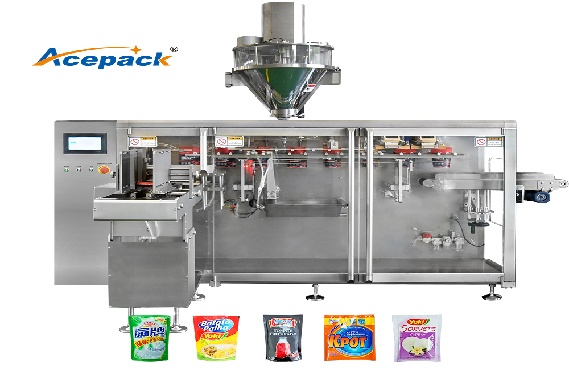
1. Technical adaptability: deep matching from "equipment parameters" to "process scenarios"
Compatibility of packaging materials and bag types
Key indicators: packaging bag material (such as aluminum foil composite film, nylon film), bag type (three-side seal, four-side seal, self-supporting bag), size range (width, length, thickness).
Case: A condiment company needs to package 200g of chili sauce. The traditional equipment cannot adapt to special-shaped self-supporting bags, resulting in a sealing wrinkle rate of 15%. After replacing it with a model that supports the "hot cutting + vacuum" process, the wrinkle rate dropped to 0.8%.
Metering and filling accuracy
Particle/powder materials: high-precision screw metering or electronic scale combination system is required, and the error rate should be less than ±0.5%.
Liquid/sauce materials: drip-proof pump body and negative pressure adsorption device are required to avoid sealing contamination.
Data reference: A pet food company has achieved an accuracy of ±0.3g per bag of 100g dog food by introducing a double-head scale + vibration plate combination metering system, which is 40% lower than the loss of traditional equipment.
Adaptability to production environment
Clean workshop: The pharmaceutical and health care products industry needs to choose 304 stainless steel body + fully enclosed design, supporting IP65 protection level.
Low temperature environment: Food companies in Northeast China need to verify the mechanical sealing performance of the equipment in an environment of -15℃ to avoid jamming caused by grease solidification
2. Cost control: rational evaluation from "purchase cost" to "full life cycle value"
Three elements of equipment cost performance
Hardware configuration: priority is given to imported PLC (such as Siemens, Mitsubishi) + domestic customized servo motor combination, taking into account stability and cost.
Consumables cost: Compare the unit price and replacement cycle of wearing parts such as sealing strips and vacuum pump oil.
Energy consumption index: Mechanical transmission models save more than 30% energy compared to hydraulic models, and annual power consumption can be reduced by 12,000 kWh.
Flexible production capacity
Workstation scalability: Supports upgrading from 8 to 16 stations to meet future production capacity expansion needs.
Modular design: A coffee company has achieved multiple uses from coffee beans to hanging ear bags by replacing the unloading module, and the switching time is shortened to 2 hours.
Hidden cost avoidance
Site occupation: Rotary models save 30% of floor space compared to linear models, which is suitable for old factory renovation projects.
Personnel training: Prioritize equipment that supports Chinese touch screen + 3D animation operation instructions, and the training cycle for new employees can be compressed to 3 days.
III. Service guarantee: Closed-loop management from "equipment delivery" to "production escort"
Manufacturer's technical strength verification
Patent reserve: Core manufacturers should hold at least 5 invention patents related to filling accuracy and sealing technology.
Certification qualifications: Food industry equipment must pass FDA, GB 4806.7 and other certifications, and the pharmaceutical industry must comply with GMP requirements.
After-sales service system
Response time: Sign a "4-hour response, 24-hour on-site" service agreement to avoid daily losses of more than 100,000 yuan due to downtime.
Spare parts inventory: Manufacturers are required to reserve key components (such as vacuum pumps and servo drives) in regional central warehouses to ensure that replacement is completed within 24 hours.
Trial verification process
Material testing: Manufacturers are required to provide packaging test reports for at least 3 similar materials, focusing on sealing strength (≥30N/15mm) and air leakage rate (≤0.1%).
Capacity acceptance: Conduct a full-load test for 72 hours in a row as agreed in the contract, and record the deviation between the actual capacity and the designed capacity (should be ≤5%).
IV. Industry customization suggestions: Upgrade from "general equipment" to "scenario-based solutions"
Food industry: Give priority to models that support the "nitrogen replacement + vacuum" process to extend the shelf life of nuts and baked foods.
Pharmaceutical industry: Online metal detector + batch number printing module is required to meet traceability requirements.
Daily chemical industry: For special-shaped products such as laundry beads, choose a model equipped with a 3D visual positioning system to ensure the sealing position accuracy of ±0.1mm.
Conclusion: Reconstruct procurement decisions with long-term value thinking
The essence of purchasing a bag-feeding packaging machine is "production capacity investment" rather than a simple equipment purchase. Enterprises need to establish an evaluation model of "technical adaptability (40%) + cost control (30%) + service guarantee (30%)" and minimize decision-making risks through field visits, material testing, and signing of long-term service agreements. Data shows that companies that adopt scientific procurement strategies can increase their packaging line overall efficiency (OEE) by more than 25%, and shorten the equipment investment payback period to 1.2 years.
Under the wave of intelligent manufacturing, choosing a bag-feeding packaging machine that "understands technology, thinks, and evolves" has become a key step for companies to build a flexible supply chain.
Recent Posts

October 26, 2016
The Most Successful Engineering Contractor


Get a Tailored Quote
Tell us about your packaging requirements. Acepack's sales engineers will respond within 3-6 hours with a customized solution.
Contact US
Product Information
Quantity
Unit
Piece
Support order samples, customization, wholesale direct, and complete payment. If the product you look for does not have corresponding customized content, pls fill out the form below to contact us, and we will reply ASAP.